
Eternal Rewards Pt. 2
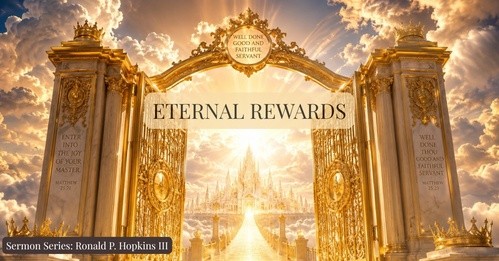
Building for Eternity: How the Life You Live Today Shapes Your Forever
There is a question that most people rarely stop to ask themselves, and it is one of the most important questions a person can ever consider: What am I actually building with my life? Every single day, whether we are conscious of it or not, we are constructing something. Our choices, our words, our motives, our habits — all of it is material going into a structure that will one day be evaluated. The Bible makes clear in 2 Corinthians 5:10 that every believer will stand before the judgment seat of Christ, where the deeds done in this life will be assessed. Not to determine salvation, but to determine reward. And that distinction changes everything about how we should be living.
The Foundation That Actually Matters
Colossians 3:2 calls believers to set their minds on things above, not on things of the earth. The Amplified version sharpens that instruction considerably, describing it as keeping the mind fixed and focused habitually on heavenly things — things with eternal value, not temporal ones. The honest truth is that designer labels, luxury vehicles, and padded retirement accounts are not inherently wrong, but they are temporary. None of it crosses over. None of it lasts. What does last is what we build on the right foundation. First Corinthians 3:11 reminds us that no other foundation can be laid than Jesus Christ. But here is where many believers stop short: they accept Christ as Savior and never go further. They receive the foundation but never build on it. And what you build on that foundation — the quality of the material, the intentionality of the construction — matters enormously. Because one day, fire will test it.
Four Things That Will Be Evaluated
Scripture points to at least four areas where every believer's life will be examined when they stand before God. Our works. First Corinthians 3:13 says every person's work will be made manifest and revealed by fire. Every action, every deed, every decision. Jesus modeled this perfectly in John 17:4, declaring that he had glorified the Father on earth and finished the work he was given to do. Activity is not the same as production. A person can be extraordinarily busy doing things God never assigned them to do. The question is not whether you were busy — it is whether you finished what he gave you. Our motives. First Corinthians 4:5 tells us that when the Lord returns, he will bring to light the hidden things of darkness and reveal the private motives of every heart. People can only see what you do. God sees why you do it. Matthew 6:1 warns against performing good deeds publicly in order to be seen by others, because whoever you perform for becomes the audience you expect a reward from. If the audience is people, the reward is people's approval. If the audience is God, the reward is eternal. Our words. Matthew 12:36 contains one of the most sobering statements in all of Scripture — that on judgment day, every idle, unproductive, careless word will require an account. Words have consequences that outlast the moment they are spoken. Proverbs 13:3 draws a sharp contrast between the person who guards their mouth and the person who speaks without thinking, warning that the latter comes to ruin. Silence is sometimes the most spiritually mature response available. Our stewardship. The parable of the talents in Matthew 25 is not just a story about money. It is about everything God has entrusted to human hands — time, gifts, opportunities, relationships, resources, even the body itself. First Corinthians 6 reminds believers that the body belongs to God. The mind belongs to God. The money passing through our hands belongs to God. We are managers, not owners. And managers are expected to give an account.
Gold, Silver, and Precious Stones — or Wood, Hay, and Stubble
First Corinthians 3:12-15 describes two categories of material that can be used to build a life. Gold, silver, and precious stones will survive fire. Wood, hay, and stubble will not. Everything a person does in this life falls into one of those two categories. Every conversation. Every financial decision. Every act of service. Every moment of obedience or disobedience. The fire does not lie, and it does not negotiate. So what kinds of works belong in the gold, silver, and precious stones category? Obedience to God is one. John 14:15 makes the connection direct — love for Christ is demonstrated through keeping his commandments. Obedience is not always popular. It costs something. But every act of obedience to Christ, even one that goes unrecognized on earth, is never wasted. Faithfulness is another. First Corinthians 4:2 states plainly that it is required of stewards that they be found faithful. Not famous. Not impressive. Faithful. Faithful in marriage. Faithful in parenting. Faithful in the specific assignment God has placed in your hands. The level of faithfulness determines the level of reward. The fruit of the Spirit, outlined in Galatians 5:22-23, represents yet another category of eternal investment. Love, joy, peace, patience, kindness, goodness, faithfulness, gentleness, and self-control — these are the qualities God is developing in every believer through cooperation with the Holy Spirit. He is not only concerned with what you are accomplishing. He is deeply concerned with what you are becoming.
Living With Eternity in View
Colossians 3:23-24 offers a principle worth building an entire life around: whatever you do, do it with your whole heart, as unto the Lord, knowing that from him you will receive the reward of the inheritance. Not from people. From him. The things of this earth are temporary. The reward waiting on the other side of a faithful life is eternal — it never fades, never grows old, never gets taken away. The fire is coming for every person's work. The only question worth spending serious time on is this: What kind of material are you building with today?
The Foundation That Actually Matters
Colossians 3:2 calls believers to set their minds on things above, not on things of the earth. The Amplified version sharpens that instruction considerably, describing it as keeping the mind fixed and focused habitually on heavenly things — things with eternal value, not temporal ones. The honest truth is that designer labels, luxury vehicles, and padded retirement accounts are not inherently wrong, but they are temporary. None of it crosses over. None of it lasts. What does last is what we build on the right foundation. First Corinthians 3:11 reminds us that no other foundation can be laid than Jesus Christ. But here is where many believers stop short: they accept Christ as Savior and never go further. They receive the foundation but never build on it. And what you build on that foundation — the quality of the material, the intentionality of the construction — matters enormously. Because one day, fire will test it.
Four Things That Will Be Evaluated
Scripture points to at least four areas where every believer's life will be examined when they stand before God. Our works. First Corinthians 3:13 says every person's work will be made manifest and revealed by fire. Every action, every deed, every decision. Jesus modeled this perfectly in John 17:4, declaring that he had glorified the Father on earth and finished the work he was given to do. Activity is not the same as production. A person can be extraordinarily busy doing things God never assigned them to do. The question is not whether you were busy — it is whether you finished what he gave you. Our motives. First Corinthians 4:5 tells us that when the Lord returns, he will bring to light the hidden things of darkness and reveal the private motives of every heart. People can only see what you do. God sees why you do it. Matthew 6:1 warns against performing good deeds publicly in order to be seen by others, because whoever you perform for becomes the audience you expect a reward from. If the audience is people, the reward is people's approval. If the audience is God, the reward is eternal. Our words. Matthew 12:36 contains one of the most sobering statements in all of Scripture — that on judgment day, every idle, unproductive, careless word will require an account. Words have consequences that outlast the moment they are spoken. Proverbs 13:3 draws a sharp contrast between the person who guards their mouth and the person who speaks without thinking, warning that the latter comes to ruin. Silence is sometimes the most spiritually mature response available. Our stewardship. The parable of the talents in Matthew 25 is not just a story about money. It is about everything God has entrusted to human hands — time, gifts, opportunities, relationships, resources, even the body itself. First Corinthians 6 reminds believers that the body belongs to God. The mind belongs to God. The money passing through our hands belongs to God. We are managers, not owners. And managers are expected to give an account.
Gold, Silver, and Precious Stones — or Wood, Hay, and Stubble
First Corinthians 3:12-15 describes two categories of material that can be used to build a life. Gold, silver, and precious stones will survive fire. Wood, hay, and stubble will not. Everything a person does in this life falls into one of those two categories. Every conversation. Every financial decision. Every act of service. Every moment of obedience or disobedience. The fire does not lie, and it does not negotiate. So what kinds of works belong in the gold, silver, and precious stones category? Obedience to God is one. John 14:15 makes the connection direct — love for Christ is demonstrated through keeping his commandments. Obedience is not always popular. It costs something. But every act of obedience to Christ, even one that goes unrecognized on earth, is never wasted. Faithfulness is another. First Corinthians 4:2 states plainly that it is required of stewards that they be found faithful. Not famous. Not impressive. Faithful. Faithful in marriage. Faithful in parenting. Faithful in the specific assignment God has placed in your hands. The level of faithfulness determines the level of reward. The fruit of the Spirit, outlined in Galatians 5:22-23, represents yet another category of eternal investment. Love, joy, peace, patience, kindness, goodness, faithfulness, gentleness, and self-control — these are the qualities God is developing in every believer through cooperation with the Holy Spirit. He is not only concerned with what you are accomplishing. He is deeply concerned with what you are becoming.
Living With Eternity in View
Colossians 3:23-24 offers a principle worth building an entire life around: whatever you do, do it with your whole heart, as unto the Lord, knowing that from him you will receive the reward of the inheritance. Not from people. From him. The things of this earth are temporary. The reward waiting on the other side of a faithful life is eternal — it never fades, never grows old, never gets taken away. The fire is coming for every person's work. The only question worth spending serious time on is this: What kind of material are you building with today?
Posted in Eternal Rewards
Recent
Archive
2026
January
February
April
September
October
2025
May
August
September
October
November
No Comments