
Eternal Rewards
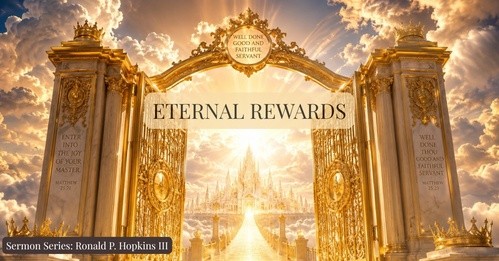
Eternity Is Not a Concept — It Is Your Destination
Most people spend the majority of their lives thinking about tomorrow. The next paycheck, the next vacation, the next season of life. But rarely do we stop and think about what comes after the last breath. And yet, that question — what happens after this life ends — is the most important question any person will ever face. Not because it is morbid or fearful, but because the answer shapes everything about how you live today.
Colossians 3 opens with a striking challenge. The apostle Paul instructs believers to set their minds on things above, not on the things of the earth. He does not frame this as a gentle suggestion or a spiritual bonus for the especially devoted. It is a command. The word translated as "affection" in that passage literally means the mind. In other words, your thought life, your focus, your daily mental posture — all of it is meant to be anchored in heavenly realities. The question worth sitting with is this: how much of your mental energy is actually pointed upward?
Eternity Is Longer Than You Can Imagine
The word eternity is one we throw around casually, but its weight is staggering. An unending existence. A life that never concludes. The human mind genuinely cannot wrap itself around that concept, yet it is the reality every single person on earth is moving toward. You were not designed to simply live for seventy or eighty years and disappear. You were designed to live forever — and you will. The only question is where. Scripture is clear that there are two eternal destinations. One is a continued and deepening relationship with God, walking with Him, knowing Him fully, and ruling alongside Him. The other is an eternal separation from Him — not because God arbitrarily assigns people to that fate, but because people choose it. Romans 6:23 reminds us that the consequence of sin is death, but the gift of God is eternal life through Jesus Christ. Eternal life is not earned. It is received. And the tragedy is not that God withholds it — He is, as Ephesians 2 describes, rich in mercy. The tragedy is that so many people refuse it.
Two Judgments, Two Groups
One of the most clarifying truths in all of Scripture is that there are two distinct judgments described in the New Testament, and they are not the same event for the same people.
For those who have placed their faith in Jesus Christ, there is what Scripture calls the Bema seat — the judgment seat of Christ. Second Corinthians 5:10 describes it plainly: every believer will appear before Christ to receive what is due for what they have done in the body, whether good or bad. This is not a judgment about salvation. Your name is already written in the book of life. This is an evaluation of stewardship. What did you do with the time, the gifts, the calling, and the opportunities God placed in front of you? For those who never receive Christ, Revelation 20 describes the great white throne judgment. Every person whose name is not found written in the book of life will stand before God and be judged according to their works. The lake of fire described in that passage was never designed for people. It was prepared for the devil and his angels. But when a person spends their entire life rejecting the one who offers life, they are, in effect, choosing separation from the source of all life.
Your Behavior Builds Your Eternity
Here is where the message becomes deeply practical. Ephesians 2:8-10 makes a critical distinction: you are not saved by good works, but you are saved for good works. The things God planned for you to do in this life were prepared in advance. And when you do them — when you pray, when you serve, when you give, when you show up, when you use your gifts — those deeds go ahead of you. Revelation 14:13 says that those who die in the Lord are blessed, for their good deeds follow them. Think about that. Every act of faithfulness, every moment of intercession, every sacrifice of time and comfort for the sake of others — it is accumulating. It is constructing something in eternity that you cannot yet see. Jesus said in John 14 that He goes to prepare a place. What that place looks like may be directly connected to what you are doing right now. On the other hand, the works done outside of God's assignment — the things done for personal recognition, the time spent on distractions while ignoring His prompting, the gifts left unused — Scripture indicates these will be tried by fire. First Corinthians 3:13 describes a refining process in which every person's work will be revealed for what it truly is. What survives that fire becomes the basis of reward. What does not survive is simply gone.
The Urgency of Now
First Timothy 4:1 carries a sobering warning: in the last times, some will turn away from the faith. They will follow deceptive spirits and teachings that lead them away from truth. This is not a distant prophecy. It is a present reality. The falling away is happening now. And in the middle of it, there is a remnant of people who are choosing to stay anchored, to stay focused, to stay spiritually alive. First Thessalonians 4:16-17 describes the catching away of the church — those who are spiritually alive and remaining will be caught up to meet the Lord. The word alive in that passage carries the weight of spiritual vitality. It describes those who are actively pursuing God, not those who are simply maintaining a religious label. The invitation of eternity is not complicated. Believe in Jesus Christ, receive the life He offers, and then live — genuinely live — in a way that reflects where you are going. Let your prayer life grow. Let your time be stewarded with intention. Let your gifts be put to use. Let your mind be set on things above. Because one day, every knee will bow. Every tongue will declare allegiance to God. And each person will give a personal account. The goal is not to arrive at that moment with regret. The goal is to arrive with a story worth telling — one of faithfulness, purpose, and a life fully surrendered to the one who gave everything so that eternity could be yours.
Colossians 3 opens with a striking challenge. The apostle Paul instructs believers to set their minds on things above, not on the things of the earth. He does not frame this as a gentle suggestion or a spiritual bonus for the especially devoted. It is a command. The word translated as "affection" in that passage literally means the mind. In other words, your thought life, your focus, your daily mental posture — all of it is meant to be anchored in heavenly realities. The question worth sitting with is this: how much of your mental energy is actually pointed upward?
Eternity Is Longer Than You Can Imagine
The word eternity is one we throw around casually, but its weight is staggering. An unending existence. A life that never concludes. The human mind genuinely cannot wrap itself around that concept, yet it is the reality every single person on earth is moving toward. You were not designed to simply live for seventy or eighty years and disappear. You were designed to live forever — and you will. The only question is where. Scripture is clear that there are two eternal destinations. One is a continued and deepening relationship with God, walking with Him, knowing Him fully, and ruling alongside Him. The other is an eternal separation from Him — not because God arbitrarily assigns people to that fate, but because people choose it. Romans 6:23 reminds us that the consequence of sin is death, but the gift of God is eternal life through Jesus Christ. Eternal life is not earned. It is received. And the tragedy is not that God withholds it — He is, as Ephesians 2 describes, rich in mercy. The tragedy is that so many people refuse it.
Two Judgments, Two Groups
One of the most clarifying truths in all of Scripture is that there are two distinct judgments described in the New Testament, and they are not the same event for the same people.
For those who have placed their faith in Jesus Christ, there is what Scripture calls the Bema seat — the judgment seat of Christ. Second Corinthians 5:10 describes it plainly: every believer will appear before Christ to receive what is due for what they have done in the body, whether good or bad. This is not a judgment about salvation. Your name is already written in the book of life. This is an evaluation of stewardship. What did you do with the time, the gifts, the calling, and the opportunities God placed in front of you? For those who never receive Christ, Revelation 20 describes the great white throne judgment. Every person whose name is not found written in the book of life will stand before God and be judged according to their works. The lake of fire described in that passage was never designed for people. It was prepared for the devil and his angels. But when a person spends their entire life rejecting the one who offers life, they are, in effect, choosing separation from the source of all life.
Your Behavior Builds Your Eternity
Here is where the message becomes deeply practical. Ephesians 2:8-10 makes a critical distinction: you are not saved by good works, but you are saved for good works. The things God planned for you to do in this life were prepared in advance. And when you do them — when you pray, when you serve, when you give, when you show up, when you use your gifts — those deeds go ahead of you. Revelation 14:13 says that those who die in the Lord are blessed, for their good deeds follow them. Think about that. Every act of faithfulness, every moment of intercession, every sacrifice of time and comfort for the sake of others — it is accumulating. It is constructing something in eternity that you cannot yet see. Jesus said in John 14 that He goes to prepare a place. What that place looks like may be directly connected to what you are doing right now. On the other hand, the works done outside of God's assignment — the things done for personal recognition, the time spent on distractions while ignoring His prompting, the gifts left unused — Scripture indicates these will be tried by fire. First Corinthians 3:13 describes a refining process in which every person's work will be revealed for what it truly is. What survives that fire becomes the basis of reward. What does not survive is simply gone.
The Urgency of Now
First Timothy 4:1 carries a sobering warning: in the last times, some will turn away from the faith. They will follow deceptive spirits and teachings that lead them away from truth. This is not a distant prophecy. It is a present reality. The falling away is happening now. And in the middle of it, there is a remnant of people who are choosing to stay anchored, to stay focused, to stay spiritually alive. First Thessalonians 4:16-17 describes the catching away of the church — those who are spiritually alive and remaining will be caught up to meet the Lord. The word alive in that passage carries the weight of spiritual vitality. It describes those who are actively pursuing God, not those who are simply maintaining a religious label. The invitation of eternity is not complicated. Believe in Jesus Christ, receive the life He offers, and then live — genuinely live — in a way that reflects where you are going. Let your prayer life grow. Let your time be stewarded with intention. Let your gifts be put to use. Let your mind be set on things above. Because one day, every knee will bow. Every tongue will declare allegiance to God. And each person will give a personal account. The goal is not to arrive at that moment with regret. The goal is to arrive with a story worth telling — one of faithfulness, purpose, and a life fully surrendered to the one who gave everything so that eternity could be yours.
Posted in Eternal Rewards
Posted in eternal, rewards, heaven, heavenly, death, eternity, destination
Posted in eternal, rewards, heaven, heavenly, death, eternity, destination
Recent
Archive
2026
January
February
April
September
2025
May
August
September
October
November
1 Comment
This is a good Word, ??✝️